
What Size Generator Do I Need for My Outdoor Event
To choose the right generator for outdoor events, add up the wattage of all your equipment and increase that total by 20%. Most outdoor events need between 3,000 and 8,000 watts. This method helps you avoid power shortages and keeps your event running smoothly.
Outdoor Event Power Needs
List Your Equipment
First, make a list of every device you will use. This helps you figure out how much power you need. Write down each thing, like sound systems, lights, food warmers, and phone chargers. People who plan events say checklists help you remember everything. You can find wattage on the label, in the manual, or on the maker’s website. Here is a table that shows some equipment and how much wattage they use at different outdoor events:
| Event Type | Equipment | Typical Wattage |
|---|---|---|
| Pool Party | Music system, pool lights, phone charging | 800–1200W |
| Birthday Party | Refrigerator, projector, decorative lighting | 1000–1500W |
| School Event | PA system, stage lighting, snack stands | 500–700W, 800–1200W, 800–1000W |
| Neighborhood Festival | Band equipment, decorative lighting, refrigerated drink stalls | 1000–1500W, 1500–2000W, 1000W |
| Large Celebrations | Sound system, lighting rig | 3000–4000W, 3000–4000W |
| Food and Vendor Row | Refrigeration, cooking equipment | 2000W, 1500–2500W |
| Mega Outdoor Parties | Concert-grade sound, stage lighting, LED walls | 10,000–15,000W, 15,000–20,000W, 5000–8000W |
Tip: Always write down every device, even small ones like phone chargers or fans. If you forget small things, you might not have enough power.
Add Up Wattages
After you make your list, add up the wattage for each item. This number tells you how much power your event needs. If you do not know the wattage, use an online calculator or check the maker’s guide. Experts say getting the right wattage stops your generator from being overloaded.
Account for Starting vs Running Power
Some devices, like those with motors, need more power to start than to run. You should think about both starting and running wattages when picking your generator. If you skip starting wattages, your power might go out or things could break. Here are some things to remember:
- Starting wattages are higher because devices need extra power to turn on.
- Running wattages are lower and show what is needed to keep things working.
- Knowing both numbers helps your generator handle power surges and stops outages.
- For example, a refrigerator might need 1,200 watts to start but only 800 watts to keep running.
Note: Always use the highest starting wattage for each device in your math. This makes sure your generator can handle the first big load.
Include a Safety Margin
When you finish adding wattages, add a safety margin. Safety rules say you should add about 20% more to your total wattage. This extra amount helps if there are power spikes or if you add more equipment. For example, if your total is 4,000 watts, multiply by 1.2 to get 4,800 watts. This step keeps your generator from being overloaded and helps it last longer.
Adding a safety margin is common in the event business and is backed by groups like the National Fire Protection Association.
If you follow these steps, you can pick the right size generator for your outdoor event. No matter if you use portable generators or bigger ones, knowing your power needs helps your event go well. If you need a portable generator for a small party or a big one for a festival, always put safety and reliability first.
How to Size a Generator
Use a Simple Formula
You can figure out the right generator size by using a simple formula. First, write down every device you will use. Next, check how many watts each device needs. Add up all the running wattages. Then, find the highest starting wattage for any device with a motor or compressor. This helps you cover both steady and surge power needs.
Tip: Always use the highest starting wattage for each device. This helps stop power interruptions.
After you get your total wattage, multiply it by 1.2. This adds a 20% safety margin. The safety margin helps your generator handle power spikes or extra equipment. Many event experts and groups like the National Fire Protection Association suggest this method.
Here is an easy way to do it:
- Write down all equipment and their wattages.
- Add up the running wattages.
- Find the highest starting wattage for each device.
- Add the highest starting wattage if it is more than the running total.
- Multiply the final number by 1.2 for a safety margin.
For example, if your total wattage is 4,000, multiply by 1.2. You get 4,800 watts. This is the generator size you need for your outdoor event.
If your event uses lots of motors or big appliances, add 25% for extra power. Utility and event power experts suggest this. The extra margin helps you avoid sudden power failures. It also keeps your event running smoothly.
Typical Generator Sizes for Events
Picking the right generator size depends on how many guests and what equipment you have. Always match the generator to your power needs. If the generator is too small, you might have power outages. Your equipment could get damaged. If the generator is too big, you waste fuel and need more maintenance.
Here are some common generator sizes for outdoor events:
| Event Type | Guest Count | Typical Equipment | Recommended Generator Size |
|---|---|---|---|
| Backyard Party | 20–50 | Lights, speakers, small fridge | 3,000–5,000 watts |
| Standard Outdoor Event | 50–150 | Sound system, lighting, catering | 5,000–7,000 watts |
| Medium Festival | 150–500 | Band equipment, food stalls | 8,000–15,000 watts |
| Large Wedding | 100–300 | Full lighting, sound, catering | 100 kVA |
| Major Concert/Festival | 500+ | Stage, lighting, vendors | 800–1,250 kVA |
For small events, a portable generator with 5,000 to 7,000 watts works well. For bigger events, you may need a generator with 10,000 watts or more.
When you figure out generator size, always include a safety margin. For example, if your equipment uses 100 amps at 240 volts, you need 24,000 watts. Multiply by 1.2 to get 28,800 watts. This way, you have enough power for everything.
Think about what happens if you pick the wrong size. A generator that is too small can cause power failures. It can also damage your devices. A generator that is too big wastes fuel and needs more care. Always match your generator to your event’s needs for the best results.
If you need help, event professionals and generator suppliers have tools to help you. You can also ask a licensed electrician to help you pick the right generator for your outdoor event.
Key Factors for Generator Selection
Event Type and Guest Count
You need to pick a generator that fits your event and how many people will come. Different events use different amounts of power. A wedding does not need as much power as a big music festival. The equipment you use, like sound systems or lights, changes how big your generator should be. Look at this table to compare what matters:
| Factor | Description |
|---|---|
| Event size | Big events like festivals need more power than small ones like weddings. |
| Equipment power needs | Strong gear, like concert sound systems, need bigger generators than simple lights. |
| Backup duration | Events that last longer or need backup power need bigger generators. |
| Budget | How much money you have can change what size generator you get. |
Think about how many people will be there. More guests can make it warmer, so you might need more HVAC power. Always check if your HVAC can handle the crowd.
- Weddings usually need about 2,000 watts.
- Ask vendors to help you find the total wattage.
- Generator rental companies can help you get more power if you need it.
Location and Duration
Where your event is and how long it lasts matter for your generator choice. Add up the wattage for all your equipment. Think about both steady and peak power needs. Pick a generator that can handle power surges. The fuel you use is important, too. Diesel is good for long events, gasoline is cheaper, and propane is cleaner.
- Small festivals might only need one 25 kVA generator.
- Big festivals may need more than one generator or a group of them.
- Always check how loud the generator is, especially in quiet places.
Weather and Noise Limits
Weather and local rules are important for your event. Weather can change how well your generator works. Rain or hot weather may mean you need extra covers or cooling. Noise rules matter, especially near homes. Most outdoor events should keep noise between 55 and 75 dB. In neighborhoods, sound should stay under 65 dB, which is like a normal talk.
- Put portable generators at least 5 feet away from tents or buildings.
- Never use or fill generators inside.
- Point the exhaust away from people and air vents.
The National Fire Protection Association and EPA make many of these safety rules. Always check local permits and rules before your event.
Generator for Outdoor Events: Recommendations
Weddings and Receptions
You need a good generator for outdoor weddings and receptions. Most event planners say a 3,000-watt generator is enough for a wedding. This size can run a fridge, audio and video gear, and up to 15 lights. Pick an industrial inverter generator for steady power. Renting a generator with twice the power you think you need helps stop blackouts. The National Fire Protection Association says to be careful with extension cords if you use indoor power.
- 3,000 watts is enough for most weddings.
- Inverter generators give steady power for sensitive gear.
- Always get extra power for safety.
Concerts and Performances
Concerts and shows need more power than other events. You have to run bright lights, big speakers, and video screens. These events often need three-phase power. Generator sizes go from 6 kW for small shows to 1,000 kW for big concerts. Talk to your sound and light vendors to know what you need. Load management helps spread out the power safely.
For concerts, always plan for extra power and use pro-grade generators.
Backyard Parties
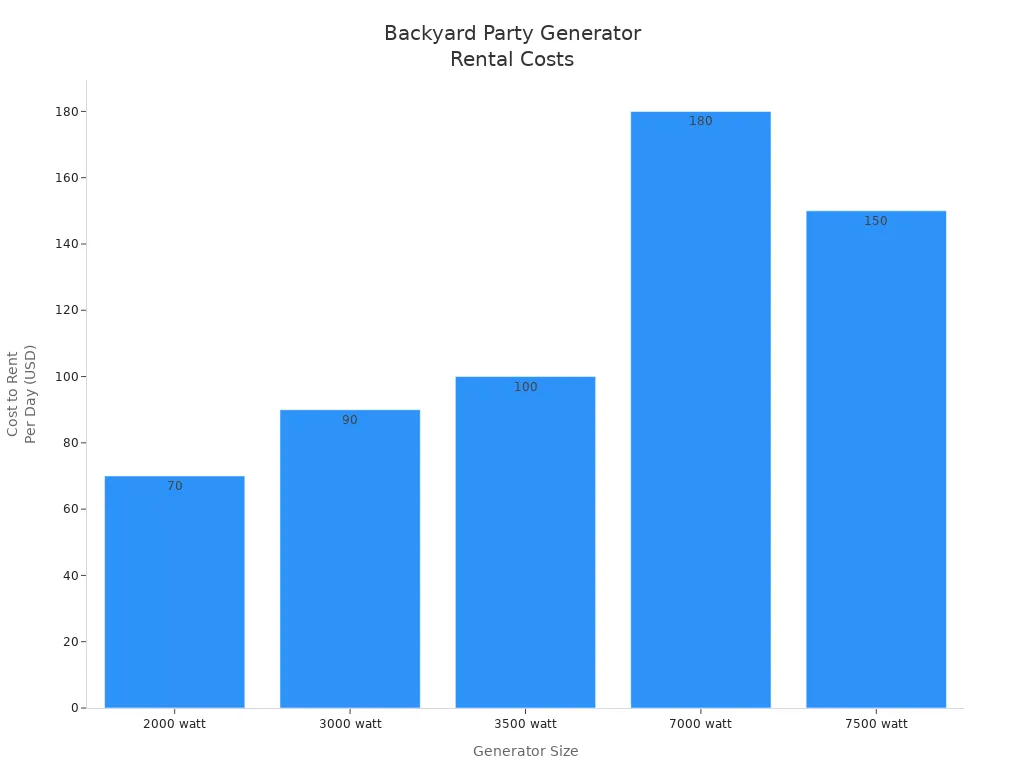
Backyard parties usually need smaller generators. You can rent a generator from 2,000 to 7,500 watts, depending on what you use. The table below shows common sizes and rental prices:
| Generator Size | Average Cost to Rent Per Day |
|---|---|
| 2000 watt | $70 |
| 3000 watt | $90 |
| 3500 watt | $100 |
| 7000 watt | $180 |
| 7500 watt | $150 |
Common things you might use are string lights (20 watts), TVs (500 watts), fans (300 watts), and bounce houses (805 watts). Add up all the watts you need and pick a generator that fits.
Festivals and Large Gatherings
Festivals and big events need careful planning. Portable generators work well for vendor booths. Standby generators are best for big events that need lots of power. Hybrid systems help save fuel at green events.
| Generator Type | Best Use Case | Power Capacity |
|---|---|---|
| Portable Generators | Small to medium events, vendor booths | Different capacities |
| Standby Generators | Big festivals needing lots of power | Hundreds of kilowatts |
| Hybrid Systems | Green events, less fuel use | Depends on setup |
Do not get a generator that is too big or too small. Too big wastes fuel. Too small can cause blackouts or break your stuff. Always check if you need single-phase or three-phase power.
Good load management and the right size generator keep your event running well.
Tips for Choosing the Right Size Generator
Portable vs Standby Options
Think about your event before picking a generator. Portable generators are easy to move. You can set them up fast. They are good for outdoor events. Standby generators stay in one spot. They need a pro to install them. The table below shows how they are different:
| Feature | Portable Generators | Standby Generators |
|---|---|---|
| Transportability | Easy to move and set up | Fixed, needs installation |
| Cost | Lower, no installation fees | Higher, includes installation |
| Power Supply | Good for essentials | Can power large setups |
| Noise Levels | Often louder | Usually quieter |
| Safety | Needs careful use | Safer for long-term use |
| Fuel Options | Gasoline, diesel, propane | Natural gas, propane |
Pick a portable generator size that fits your equipment. Make sure it matches your event size.
Fuel Types and Runtime
The fuel you use changes how long your generator runs. Gasoline is easy to buy. It works well for small events. Diesel lasts longer. It is good for bigger generators. Propane burns clean and stores well. You need tanks for propane. Here is a quick guide:
| Fuel Type | Advantages | Disadvantages | Suitability |
|---|---|---|---|
| Gasoline | Easy to buy, simple to use | Short shelf life | Small, portable generators |
| Diesel | Durable, efficient | Used in larger models | Industrial or standby generators |
| Propane | Clean, long shelf life | May cost more, needs tanks | Standby or eco-friendly outdoor events |
Propane generators are good for rural places. They help lower pollution at events.
Safety and Extra Capacity
Safety is very important when using generators outside. Put your generator at least 20 feet from buildings. This helps stop carbon monoxide problems. Use outlets that can handle rain. Keep fuel in safe containers away from heat. Teach your team how to turn off the generator fast. Keep first aid kits and fire extinguishers close.
Tip: Add 20–30% more power than you think you need. This helps if you need extra power or add new equipment.
Some mistakes are putting generators too close to buildings. Using weak cords is bad. Not storing fuel right can cause problems. Use strong cords and store fuel safely. Check your generator before your event. Groups like the National Fire Protection Association and EPA have safety rules for outdoor power.
You can figure out what size generator you need by doing these things: First, write down every piece of equipment and how many watts each one uses. Next, add 20 to 30 percent more watts for safety. Then, look at both the starting watts and running watts for your equipment. Also, make sure to check any local rules about using generators. If you are not sure what to do, you can use a generator sizing calculator or ask an expert for help. When you have the right details, you can run your event without worry.
FAQ
How do you calculate total power requirements for an outdoor event?
You need to add up the wattage for each device you will use. Always look at the label from the maker or use a calculator from the U.S. Department of Energy.
What happens if your generator size needs are too low?
If your generator is too small, your equipment might not work. You could lose power or break something. The National Fire Protection Association says it is better to pick a bigger generator.
Can you use one generator for all event equipment?
You can use one generator if it gives enough power for everything. For big events, you might need more than one generator. Always ask a certified electrician to help keep things safe.