
You need a power source you can trust to keep your construction project going well. A diesel generator for construction site gives you great reliability. You get good fuel efficiency and equipment that can handle heavy work easily. This solution helps with hard job site needs every day.
Diesel generator for construction site benefits
Reliable power supply
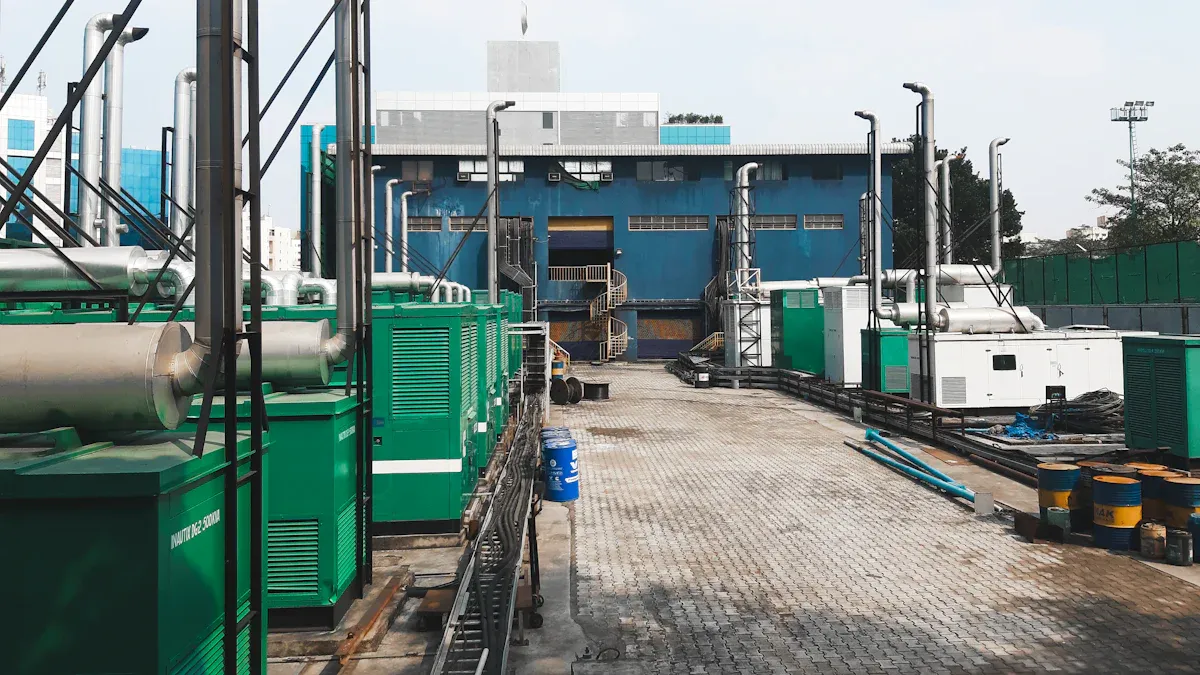
You need steady power to keep your construction site working. A diesel generator for construction site is very reliable, even in tough places. If you take care of it often, it is less likely to stop working. You can trust your equipment when you need it most. Generators that get regular checks break down less, even on long jobs. You can use a diesel generator for construction site as your main power or as backup if the power goes out. Diesel fuel is safer than gasoline because it is less likely to catch fire.
Tip: Make sure you check and service your generator often. This keeps it ready and dependable for any job.
Here is a simple table to compare diesel generators with other types:
| Advantage | Description |
|---|---|
| Cost Effectiveness | Diesel generators usually cost less to buy than others. |
| Fuel Efficiency | Diesel engines use less fuel, so you save money. |
| Durability | They are made to last in tough places and work well. |
| Low Maintenance | Fewer parts mean you fix them less and spend less on repairs. |
| Longevity | With good care, they last for many years and stay reliable. |
Fuel efficiency and longevity
A diesel generator for construction site uses fuel very well. Diesel engines burn fuel in a way that gives more energy. You save money because you do not need as much fuel as gasoline generators. Diesel generators also run longer on one tank, so you do not have to refuel as often.
- Diesel generators work best when you use them for big jobs.
- They have more energy in each gallon than gasoline, so you save fuel.
A diesel generator for construction site can last 20,000 to 30,000 hours. That is about 20 to 30 years if you take care of it. Good care helps it last even longer. This makes diesel generators a smart buy for any construction company.
- Diesel generators give lots of power with less fuel.
- They work well for a long time if you store fuel right.
- Diesel generators need less fixing than gasoline ones.
Handles heavy loads
You need a generator that can run big tools and machines. Diesel generators are great for this job. They give strong power and do not slow down, even with heavy work. This is good for running cranes, welders, and other big machines. You can count on a diesel generator for construction site to keep things running.
Note: Diesel generators can handle sudden changes in power needs. You do not have to worry about losing power when you start big machines.
Portability on job sites
Construction jobs often move to new places. Portable diesel generators let you set up power anywhere you need. You can tow them and set them up fast, which helps on far-away sites or in emergencies. Many have strong wheels and easy handles, so you can move them over rough ground.
- Portable diesel generators give power in places far from cities.
- They help you keep working without waiting for more fuel or repairs.
- You can move them easily, so you can manage your project better.
- They help you finish work on time and stay on schedule.
You can move a diesel generator for construction site from one part of a job to another. This way, you always have the power you need.
Choosing a diesel generator
Assessing power needs
You need to know how much power your site uses. Make a list of every tool and machine you will use. Write down how much power each one needs in watts or kilowatts. Some machines, like electric motors, need extra power when they start up. Think about which tools will run at the same time. Plan for more equipment in the future.
Follow these steps to get the right power amount:
- List all equipment and write down the power for each.
- Add starting power for machines with motors.
- Decide which machines will run together.
- Add a safety margin of 20% to 30% for peak loads.
- Pick a generator that gives more power than you need.
People make mistakes when they guess power needs. Look at this table to help avoid common errors:
| Mistake Type | Description |
|---|---|
| Incorrect Phase Selection | Picking the wrong phase can make equipment break and need more repairs. |
| Voltage Mismatches | Voltage must match your tools; wrong voltage can hurt them or make them work badly. |
| Inadequate Load Calculations | Not adding up the load right can make the generator too small or too big. |
| Surge Power Requirements | Big tools may need more power when starting, so plan for that. |
Tip: Always check the power numbers on your equipment labels. This helps you avoid expensive mistakes.
Sizing and capacity
You need a generator that is the right size for your job. Add up the wattage for all your tools and machines. Include both running and starting wattages. Add a safety margin for extra loads. Think about weather and future needs.
- Small generators (3,000 to 5,000 watts) are good for hand tools and lights.
- Medium generators (6,000 to 9,000 watts) run air compressors and several tools.
- Large generators (10,000 watts or more) power big machines and all site equipment.
If your generator is too small, it can overload and shut down. If it is too big, you spend more money and use more space. Voltage and frequency drops can hurt sensitive tools.
- Too small means problems and stops you did not plan.
- Too big means higher costs and wasted space.
- Wrong size can make your tools work badly.
Key features to consider
You want a generator that lasts and works well in tough places. Look for these features when you pick a diesel generator for construction site:
| Feature | Description |
|---|---|
| Durability | Made to handle shaking, bumps, and wear, so it works well in hard places. |
| Fuel Security | Diesel is safer to keep and easy to find, even far away. |
| Power Needs Calculation | You must figure out power needs right to pick the best size. |
| Prime Power Rating | Generators should have Prime Power to handle changing loads for a long time. |
| Mobility | Trailer-mounted generators are easy to move for different project steps. |
| Noise Levels | Super-silenced generators help you follow noise rules in cities. |
Pick brands that people trust. DEUTZ has strong engines with new drive systems. Kohler meets EPA rules and makes powerful generators. WINCO gives simple power for builders. Perkins, Cummins, CAT, FG Wilson, and Volvo also make good generators for construction sites.
Note: Pick a generator with a prime power rating if you need it to run for a long time.
Compliance and safety standards
You must follow safety rules and local laws when you use a generator. Make sure your generator meets these standards:
- Electrical codes: Use safe wiring and follow local rules to stop accidents.
- Local codes and regulations: Follow building and environmental laws.
- Noise regulations: Use super-silenced generators to meet noise limits and avoid fines.
- Emission standards: Check local rules to make sure your generator meets environmental rules.
OSHA makes rules for safe generator use on construction sites. You must follow these rules to keep your team safe and avoid trouble. Generators cost different amounts. You can buy simple ones for small jobs or get big ones for large projects.
Safety tip: Always read the manual and teach your crew before using a new generator.
Operation and maintenance
Setup guidelines
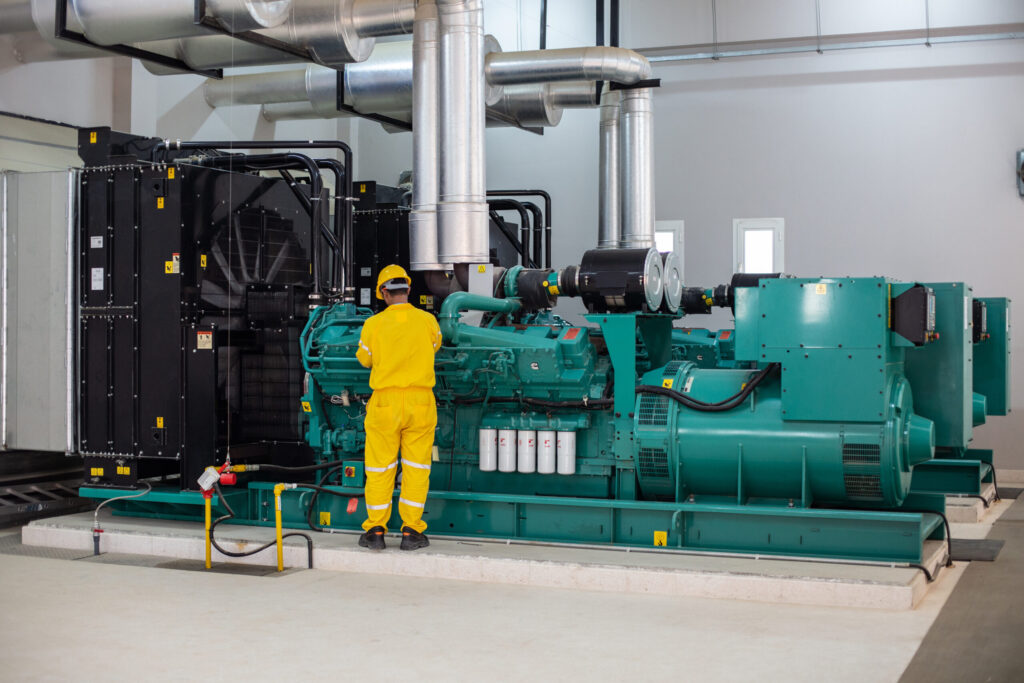
You need to set up your generator carefully. This keeps your site safe and your power steady. Put the generator in a dry place. Keep it away from fire or flood danger. Make sure you can get to it for checks and repairs. Build a strong concrete pad under the generator. The pad should be at least six inches bigger than the generator on all sides. This helps hold the weight and keeps the generator level.
Make the exhaust system send fumes away from people. Use mufflers to make the generator quieter. Mark emergency shutdown switches so everyone can see them. Keep these switches easy to reach. Plan how trucks and cranes will get to the site before the generator comes. All wiring and fuel lines must follow local rules. Test the fuel lines for leaks before starting the generator.
| Condition | Requirement |
|---|---|
| Foundation Requirements | Concrete foundation with surface flatness deviation of no more than ±3mm per meter. |
| Space Requirements | Minimum clearance of 1.5 meters around the generator and 1 meter above it. |
| Ventilation and Cooling | Intake area should be at least 1.5 times the radiator surface area for adequate airflow. |
| Safety Considerations | Keep generator away from flammable materials; fire extinguishing equipment must be available. |
| Noise Control | Use soundproof enclosures to maintain noise levels below 65dB in residential areas. |
| Exhaust Emissions | Exhaust pipes must extend outdoors and comply with local environmental regulations. |
| Electrical System Requirements | Cables should be waterproof and rodent-proof; grounding resistance should be ≤4 ohms. |
Safety precautions
You must follow safety steps when using a generator. Always put the generator outside or in a place with good airflow. This stops dangerous fumes from building up. Store diesel fuel in safe containers. Keep it away from heat. Close tanks tightly so they do not leak. Have a trained electrician do all wiring and grounding. Check that circuit breakers work before you start the generator.
Keep fire extinguishers nearby. Teach your team how to use them. Wear ear protection if you are close to the generator. Train your crew on how to shut down the generator in an emergency. Mark the switches clearly. Never put too much load on the generator. Too much load can cause fires or break your equipment. Turn off the generator after power comes back. This helps stop electric shock.
Tip: Carbon monoxide is very dangerous. Never run a generator in a closed space.
Routine maintenance
Check your generator often to keep it working well. Look for leaks every day. Check the fuel level and test the battery daily. Check the coolant and air filters each week. Change the oil and clean the fuel system every month. Ask a professional to check the generator sometimes.
| Task | Frequency |
|---|---|
| Visual checks for leaks | Daily |
| Fuel level checks | Daily |
| Battery charge checks | Daily |
| Coolant testing | Weekly |
| Air filter inspection | Weekly |
| Oil changes | Monthly |
| Fuel system cleaning | Monthly |
| Professional inspections | Periodic |
Check the fuel quality often. Keep the cooling system clean. Service the generator every six months or after 400 hours of use. If the weather is bad, check it more often. Good care helps your generator last longer and keeps your site safe.
Challenges and solutions
Managing noise
Many construction sites have strict noise rules. Diesel generators can be very loud. You can make them quieter with some smart steps. First, put the generator far from busy areas or in its own building. Next, build walls or fences that are tall and thick to block sound. Add special insulation inside the generator’s cover to soak up noise. Take care of your generator often. Machines that get regular care make less noise and last longer.
Tip: If you keep up with maintenance, your generator will be quieter and break down less.
Emissions and environment
Diesel generators let out fumes that hurt air quality and health. Construction sites make up 23% of the world’s CO2 emissions. About 5% comes from things like using generators. Diesel fumes can make workers and people nearby sick. These fumes can also harm plants, cause acid rain, and make it hard to see.
You can cut down on emissions by using new technology. Here are some choices:
| Technology | Description |
|---|---|
| Energy Storage Systems | Make generators smaller, lower noise, and give electric power at night. |
| Hydrogen Fuel Cells | Give power with no emissions and cost less to run. |
| Alternative Fuels | Make less pollution than regular diesel. |
Fuel storage and handling
Storing fuel safely keeps your site safe and stops accidents. Follow these simple rules. Use a second container to catch spills and leaks. Put clear labels on every fuel container. Keep fuel away from anything that could start a fire. Make sure there is good airflow to get rid of fumes. Ground and bond tanks to stop static sparks. Have a plan for spills. Teach your team how to handle fuel safely.
Troubleshooting issues
You can fix many generator problems by checking things often. Look at coolant levels, hoses, and belts a lot. Clean the radiator fins and make sure air can move through. Test the fan and cover when you do load tests. Watch for changes in temperature in the controller logs. Check battery ends for rust and make sure they are tight. Make sure the charger works and gives the right voltage.
Note: If you fix problems fast, your generator will work well and your project will stay on schedule.
You get steady power, save fuel, and have good performance with a diesel generator for your construction site.
- Pick the size that fits your job.
- Follow all safety and rule requirements.
- Do regular checks and care.
Good decisions help your project stay safe, work well, and finish on time.
FAQ
How often should you service a diesel generator on a construction site?
Check your generator every day. Do a full service every 400 hours or every six months. Taking care of it often stops it from breaking down.
What size diesel generator do you need for a small construction site?
A small site needs a generator with 3,000 to 5,000 watts. This is enough for lights and basic tools. Always add extra power for more equipment.
Can you use biodiesel in a construction site diesel generator?
Most new diesel generators can use biodiesel blends. Always read the manufacturer’s guide before changing fuels. This helps you avoid engine trouble.