
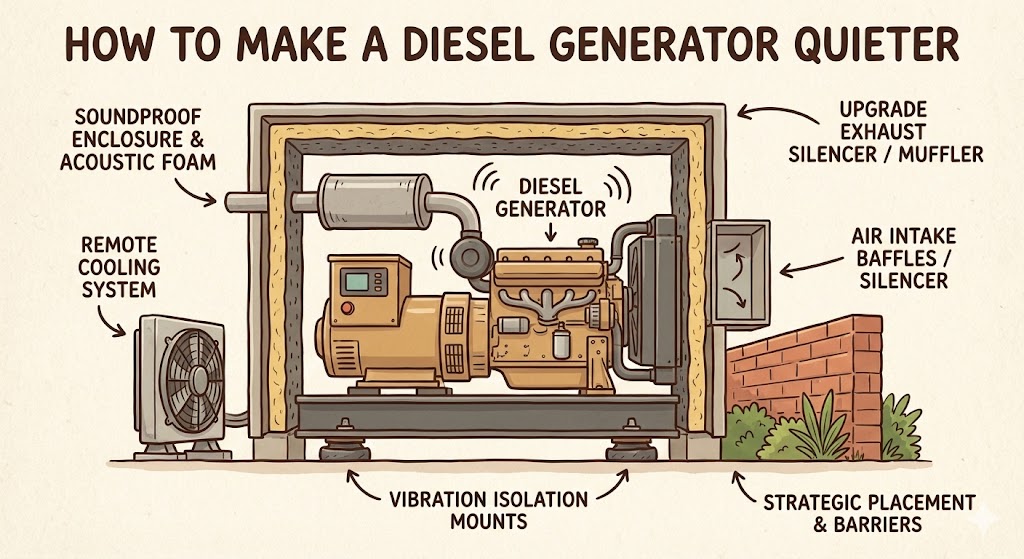
Diesel generators can make noise from 70 to over 100 decibels. This is much louder than a quiet diesel generator. You can make them quieter in many ways. Move the generator farther away. Build walls that block sound. Add insulation to stop noise. Put in anti-vibration mounts. Change the exhaust system. You can also pick a quieter generator.
| Generator Type | Average Decibel Level (dB) |
|---|---|
| Diesel Generators | 70 to over 100 |
| Gas Generators | 60 to 75 |
| Gasoline Generators | 64 to 89 |
| Natural Gas Generators | 60 to 80 |
| Inverter Generators | 50 to 60 |
| Solar Generators | Negligible noise |
These ways to lower noise use simple tools. They are easy for beginners to try.
Increase Distance To Reduce Noise
Positioning The Generator
You can make your diesel generator quieter by moving it farther from your house. The farther away it is, the less noise you hear. This is because sound gets weaker as it travels. If you double the distance, the noise drops by about 6 decibels. For example, if your diesel generator makes 80 decibels at 10 feet, moving it to 20 feet lowers it to 74 decibels.
Here are some ideas for where to put your diesel generator:
- Put the diesel generator far from bedrooms and living rooms.
- Use things like sheds or thick bushes to block noise.
- Build fences or walls to help keep sound away from your house.
Tip: Always look at local rules before moving your diesel generator. Some places have laws about where you can put it and how loud it can be.
Using Extension Cords Safely
You may need extension cords to move your diesel generator farther away. It is important to use them safely. Pick strong, outdoor cords that fit your diesel generator’s power.
Here are some safety tips for using extension cords:
- Use heavy-duty cords that are not damaged.
- Make sure the cord can handle your diesel generator’s amps or watts.
- Place cords so people will not trip over them.
- Use thicker cords for big devices to stop overheating.
- For cords up to 25 feet, use 16 AWG for small jobs and 14 AWG for bigger jobs.
- For cords between 25-50 feet, use 14 AWG or 12 AWG depending on what you need.
- For cords over 100 feet, use 10 AWG or thicker for strong devices.
Note: Long cords can lower voltage. This can hurt your equipment or make it work worse. Always check the cord’s rating before you use it.
Noise Reduction: Acoustic Barriers
Building Simple Barriers
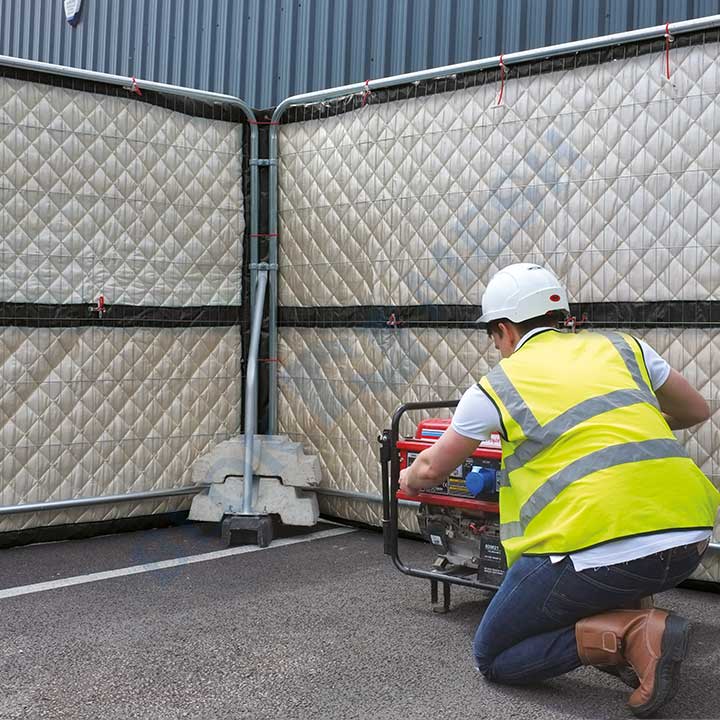
You can use acoustic barriers to stop sound from your diesel generator. Many people say to build barriers with plywood, fencing, or drywall. These things help block and soak up noise. Put the barrier between your generator and the place you want to keep quiet. For more noise control, put soundproofing foam or old carpet inside the barrier. This helps soak up more sound and cuts down echo. Studies show that using many layers can lower generator noise by 20–30 decibels. Some special panels can cut noise by up to 45 decibels. You can use both insulation and sound blockers for even better results.
Tip: Make sure your barrier lets air move through. Your generator needs air to work safely.
Generator Enclosures
Making a generator enclosure is another way to use acoustic barriers. You can build an enclosure with plywood or drywall and add a special door for repairs. Experts say to put foam or mass loaded vinyl inside the enclosure. These things soak up sound and stop shaking. Tests show that these enclosures can lower city generator noise by 18–22 decibels. The table below shows how different things help cut noise:
| Method/Material | Noise Reduction (dB) |
|---|---|
| Sound absorption panels | 5–7 |
| Mass Loaded Vinyl (MLV) | Over 20 |
| Proper sealing techniques | Significant reduction |
You should close all holes with rubber strips or caulk. This stops sound from getting out. Always add a fan or vent to keep your generator cool. Many rules and guides say to do these things for safe and good noise control.
Acoustic Insulation For Generators
Insulation Materials
You can use acoustic insulation to make your diesel generator quieter. There are different materials that help with this.
- Acoustic foam takes in sound waves and turns them into heat.
- Fiberglass insulation stops noise in the air and lowers shaking.
- Recycled cotton insulation is good for the environment and absorbs sound.
Some materials are better at blocking noise in the air. Others are better at stopping vibrations. You get the best results when you mix different insulation types.
Tip: Pick insulation that does not get ruined by heat or water near your generator.
Tests show how well acoustic insulation works in real places. The table below shows how much noise goes down in different spots:
| Location | Noise Level (dBA) | Conventional Units (dBA) | Noise Reduction (%) |
|---|---|---|---|
| Urban Hospital | 54.3 | 79.8 | 32.0 |
| School Campus | 48.6 | N/A | N/A |
| University Lab | +3 (background) | N/A | N/A |
Installation Steps
You can put in acoustic insulation using simple tools. Follow these steps to do it right:
- Put a thick rubber mat under the generator to stop shaking.
- Cover the generator with a rubber soundproof cover. Make sure exhaust fumes can get out safely.
- Stick foam panels, like LF125 acoustic panels, inside the cover to soak up more sound.
- Use a bucket of water to guide exhaust fumes away. This works like a basic muffler.
When you insulate your generator, it works better and is quieter. Always make sure air can move so your generator does not get too hot.
Anti-Vibration Mounts To Reduce Noise
Benefits Of Anti-Vibration Pads
Anti-vibration mounts help make your diesel generator quieter. These mounts stop shaking from moving into the ground. Using anti-vibration pads keeps your generator safe from harm. Your generator will last longer with these pads. You will spend less money fixing your generator. The pads help your generator stay steady. This makes it work better and keeps you safe.
- Anti-vibration mounts stop shaking from spreading through the ground.
- They lower noise that comes from your generator shaking.
- You can pick rubber or spring mounts for different needs.
- Anti-vibration pads keep machines safe and help them last longer.
- These pads mean you fix your generator less and work more.
- They keep your generator steady and help prevent accidents.
Tip: You can put anti-vibration mounts under diesel generators to cut down sound waves. Most mounts use rubber, springs, or dampers for the best results.
How To Install Mounts
You can put in anti-vibration mounts by following easy steps. First, ask an engineer to check if the ground is strong enough. Next, use tools to see how much your generator shakes. Pick mounts that are stiff enough and can soak up shaking. Make sure pipes and exhausts can bend so they do not break.
- Ask an engineer to look at the ground under your generator.
- Use tools to measure how much your generator shakes.
- Pick mounts that are stiff and soak up shaking.
- Make sure pipes and exhausts can bend and move.
When you use anti-vibration mounts, your generator gets quieter and safer. Your generator will also work well for a longer time.
Exhaust Modifications For Quieter Operation
Attenuators And Mufflers
You can make your diesel generator quieter by changing the muffler or adding an attenuator. Mufflers help by blocking and soaking up exhaust noise. If you put in a bigger, better muffler, you get more noise reduction. Attenuators use special materials to soak up sound and turn it into heat. This lowers the noise even more. These tools also spin the air, which makes sound waves shorter and stops noise from spreading. Many big generators use attenuation systems to be as quiet as possible.
Here is a table that shows how much noise different silencers can cut:
| Type of Silencer | Noise Reduction (dBA) |
|---|---|
| Industrial-grade | 20–25 |
| Common residential | 25–32 |
| Critical-grade | 30–38 |
| Super-critical | 35–42 |
| Super Extreme Grade | 45–60 |
| Super-critical-plus | Up to 50 |
If you use a sound-blocking enclosure, you can lower noise by up to 40 dB. Some big attenuators can cut noise by as much as 90 dB.
Tip: Always check the size and type of muffler before you change it. Pick a silencer that fits your generator’s exhaust.
Positioning The Exhaust Pipe
You can make your generator quieter by moving the exhaust pipe. Point the end of the exhaust away from bedrooms or offices. If you aim the exhaust up or toward open spaces, you lower the noise. Keep the generator and exhaust pipe far from places where people are. This easy change can really help with noise.
Note: Do not point the exhaust pipe at windows or doors. This keeps your home quieter and safer.
Quiet Diesel Generator: Buy The Right Model
Features Of Quiet Generators
If you want a quiet diesel generator, look for special features. Some models have exhaust systems that lower noise. Anti-vibration mounts help stop shaking and sound. These features keep noise between 55 and 75 decibels. That is quiet enough for homes and camping. Some generators have better cooling and airflow. Engine changes and noise reduction tech also help. Some are small and easy to move. They use power well.
Here are important features you should check:
- Soundproof enclosure helps block noise when running.
- Vibration dampening lowers shaking and sound.
- Advanced muffler and exhaust systems cut engine noise.
- Good cooling systems keep the engine quiet and cool.
- Digital control panels make it easy to use.
- Portability lets you move the generator easily.
- Fuel efficiency saves you money over time.
| Characteristic | Description |
|---|---|
| Soundproof Canopy | Thick cover with foam inside keeps noise from getting out. |
| Efficient Cooling | Radiator, fan, and coolant work together for quiet use. |
| Exhaust System | Special parts lower noise and clean the air. |
| Control Panel | Digital screen helps you check and control the generator. |
When To Upgrade
Think about getting a new quiet diesel generator if yours is loud or old. If your generator makes more than 80 decibels, it can bother people nearby. New generators are quieter and use less fuel. They last longer and are easier to fix. You get longer warranties too. Compare models with soundproof enclosures and good exhaust systems. Upgrading helps you enjoy quiet and still have power.
Tip: Pick a quiet diesel generator with less than 75 decibels for homes.
Regular Maintenance For Noise Reduction
Checking For Loose Parts
You can make your diesel generator quieter by checking for loose parts often. Loose bolts or nuts can make the generator shake and rattle. These small problems can make your generator much louder. When you look at your generator, see if anything moves or shakes. Tighten any loose parts right away. You should also look at the engine mounts. If the mounts break or wear out, your generator will shake more and get noisier.
- Look for loose bolts or nuts to stop shaking.
- Make sure engine mounts are tight and not broken.
- Checking often helps stop small problems from getting worse.
Tip: If you hear new rattling or buzzing, turn off the generator and check for loose parts before you use it again.
Keeping The Generator In Good Condition
Taking care of your generator helps keep it quiet. When you look after the engine, it runs smoother and makes less noise. Clean the air filter and change the oil when the manual says. Replace old parts quickly. Balance spinning parts so the generator works well. This stops uneven wear and keeps noise low. New generators have better engines and use sound absorbing materials to lower noise. You can put sound absorbing materials around your generator to make it even quieter.
- Clean and change filters to help the engine run quietly.
- Balance spinning parts to stop extra shaking.
- Use sound absorbing materials to soak up engine noise.
Note: Doing regular maintenance keeps your generator quiet and helps it last longer and work better.
You can make your diesel generator quieter by using a few steps together. Try these ideas:
- Put your generator in a spot away from people.
- Build walls to block sound and add insulation.
- Take care of your generator and fix it often.
Doing all these things helps make your space quieter and better for everyone. Picking a quiet generator helps even more.
FAQ
How do you build a custom-built enclosure for a diesel generator?
You can build an enclosure with plywood and soundproofing. Add vents so air can move in and out. Put in panels that open for repairs.
Should you create a permanent enclosure for your generator?
A permanent enclosure is good for quiet over many years. It keeps your generator safe and makes less noise near homes.
What is the best way to reduce generator noise quickly?
Move your generator farther away from people. Use barriers to block sound. These steps are fast and need only simple tools.