In the world of industrial power generation, the decision between a water-cooled diesel generator and its air-cooled counterpart is one of the most critical choices a buyer can make. For businesses and homeowners facing prolonged power outages or operating in extreme conditions, this choice dictates not only the reliability of their electricity supply but also the long-term operational costs. At SRGENSET, we understand that selecting the right cooling system is paramount to ensuring your generator delivers peak performance when you need it most. This comprehensive guide will dissect the differences between liquid-cooled and air-cooled systems, helping you determine which technology aligns perfectly with your specific power needs.
Key Takeaways
- Cooling Efficiency: Liquid-cooled systems use a closed-loop radiator and coolant to dissipate heat, offering superior temperature control compared to air-cooled systems that rely on fans.
- Longevity and Durability: Water-cooled diesel generators typically last significantly longer, with lifespans ranging from 60,000 to 90,000 hours, compared to 1,000 to 3,000 hours for air-cooled units.
- Performance Under Load: Liquid-cooled generators maintain stable temperatures even under high loads and in hot climates, preventing overheating and ensuring consistent power output.
- Noise Levels: Water-cooled units are generally quieter than air-cooled models, making them suitable for noise-sensitive environments.
- Cost Considerations: While air-cooled generators have a lower upfront cost, water-cooled models offer better fuel efficiency and higher resale value, often making them more economical in the long run.
- Best Use Cases: For heavy-duty, continuous use in industries, data centers, or large commercial buildings, a water-cooled diesel generator is the superior investment.
The Science of Staying Cool: Mechanisms Compared
The core difference between these two types of generators lies in their cooling mechanisms. An air-cooled generator relies on a series of fins attached to the engine block and a fan to force air over these fins, carrying heat away. This system is simple and effective for smaller engines but struggles under intense, continuous workloads.
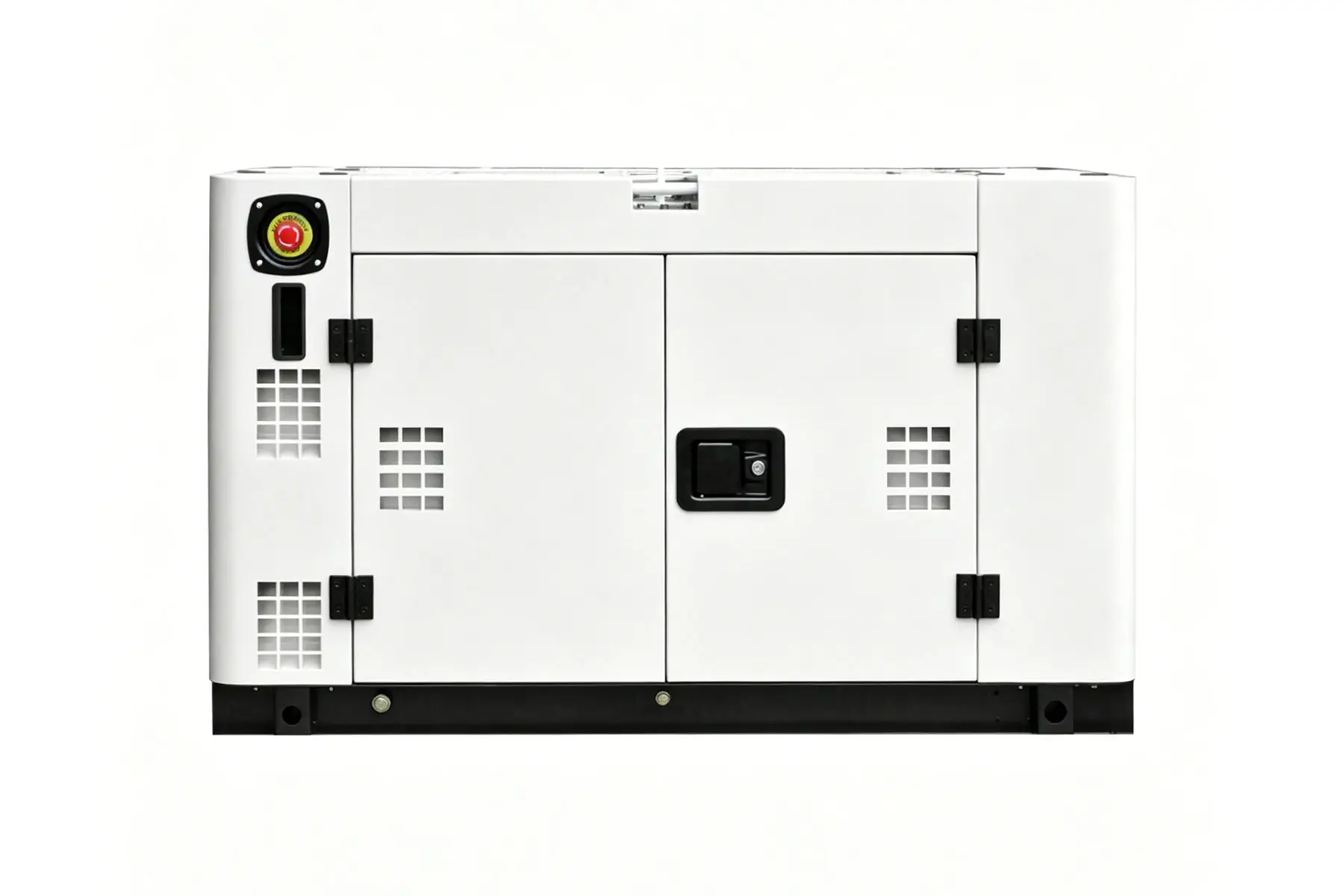
Conversely, a water-cooled diesel generator employs a sophisticated liquid cooling system. A water pump circulates a mixture of coolant and water through the engine block, absorbing heat. This hot liquid is then pumped to a radiator, where it is cooled by a fan before being recirculated. This closed-loop system is far more efficient at managing the high heat output of large industrial engines.
Performance Face-Off: Efficiency and Longevity
When it comes to performance, the water-cooled diesel generator consistently outperforms air-cooled models, especially in demanding scenarios. Because liquid coolant can absorb more heat than air, water-cooled units maintain a stable engine temperature, preventing the thermal stress that leads to wear and tear. This stability translates directly into longevity. Industry data shows that while an air-cooled engine might last 1,000 to 3,000 hours, a well-maintained liquid-cooled engine can operate reliably for 60,000 to 90,000 hours.
Furthermore, fuel efficiency is a significant advantage for liquid-cooled systems. Because the engine runs at an optimal temperature, it converts diesel into power more efficiently. At high loads, a water-cooled generator can consume significantly less fuel per hour compared to an air-cooled unit of the same power output, leading to substantial savings over time.
The Cost-Benefit Analysis: Upfront vs. Long-Term Value
It is true that a water-cooled diesel generator carries a higher initial price tag. The complexity of the cooling system, including the radiator and hoses, increases the manufacturing cost. Installation can also be more involved, requiring a prepared base and proper ventilation for the radiator.
However, viewing the purchase through a long-term lens reveals the true value of liquid cooling. The dramatically extended lifespan means you won’t need to replace your generator as frequently. Additionally, the superior fuel efficiency lowers your operational costs, and the robust build quality ensures a higher resale value when you are ready to upgrade. For businesses where downtime is not an option, the reliability of a water-cooled system is invaluable.
Ideal Applications: Finding Your Perfect Match
Understanding your specific power needs is crucial for making the right choice. If you require a generator for light, intermittent use, such as powering a small workshop or providing backup for a residential home, an air-cooled model might suffice due to its lower cost and simplicity.
However, if your operations depend on continuous, heavy-duty power, there is no substitute for a water-cooled diesel generator. These units are the backbone of critical infrastructure, including:
- Large commercial buildings and office complexes
- Industrial factories and manufacturing plants
- Data centers requiring uninterrupted power
- Hospitals and healthcare facilities
- Mining operations and remote construction sites
For these applications, the reliability, durability, and efficiency of a liquid-cooled system are not just beneficial—they are essential.
Expert Insights: Real-World Reliability
Business owners and facility managers who have chosen water-cooled systems consistently report high satisfaction with their investment. They value the peace of mind that comes with knowing their generator can handle extended blackouts without overheating. While maintenance is more involved—requiring regular checks of coolant levels, hoses, and the radiator—the trade-off is a machine that delivers unwavering performance year after year.
At SRGENSET, we stand behind the superiority of liquid-cooled technology for industrial applications. Our engineering team designs every water-cooled diesel generator to meet the highest standards of reliability and efficiency, ensuring our customers receive a product that is built to last.
Frequently Asked Questions (FAQ)
How often should I service my water-cooled diesel generator?
You should perform maintenance every six months or after 250 hours of operation. This includes checking coolant levels, oil, filters, and inspecting hoses for wear.
Can I use a water-cooled generator for home backup power?
Yes, especially for large homes or areas with frequent, long-duration power outages. They are quieter and more reliable for extended use compared to air-cooled models.
What is the main difference between water-cooled and air-cooled generators?
The primary difference is the cooling method. Water-cooled generators use a liquid coolant system for superior heat management, while air-cooled generators use fans and fins. This makes water-cooled units more durable, efficient, and suitable for heavy loads.
Do water-cooled generators cost more to maintain?
Yes, they require more frequent and complex maintenance, such as coolant changes and radiator cleaning. However, this upkeep is essential for achieving their long lifespan and high fuel efficiency.
Are water-cooled diesel generators more fuel-efficient?
Yes, they are significantly more fuel-efficient, especially under high loads. The stable engine temperature allows for better combustion, resulting in lower fuel consumption per kilowatt-hour generated.